Using Data to Help Address Heat Stress at Interfor's Sault Ste. Marie I-Joist Facility
When people think about workplace safety in an industrial setting, they often focus on visible hazards such as moving equipment and physical tasks. However, environmental conditions can also have a significant impact on worker safety. During the summer months, high temperatures and humidity can create serious heat stress risks that can contribute to fatigue, reduced concentration, dehydration, and in severe cases, heat exhaustion, or heat stroke. Interfor's Heat and Cold Stress Policy recognizes these risks and emphasizes the importance of recognizing symptoms, staying hydrated, and taking preventative action before workers are affected.
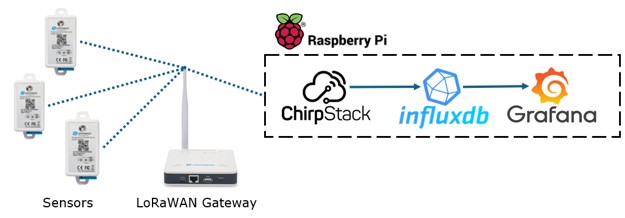
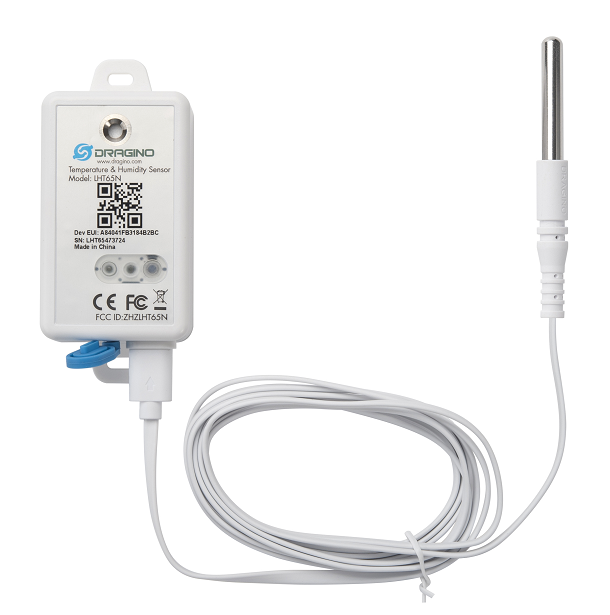
During my internship at Interfor's Sault Ste. Marie Division I-joist manufacturing facility, I had the opportunity to work on a project designed to provide greater visibility into these workplace environmental conditions. To accomplish this, I developed an Internet of Things (IoT) monitoring system using wireless sensors, a LoRaWAN gateway, and a Raspberry Pi 5. The wireless Dragino temperature and humidity sensors send out data packets with their current values every 10 minutes. These packets are received by the gateway, where they are decrypted and forwarded to a database hosted on the Raspberry Pi. Finally, Grafana was used to create a dashboard that can be viewed locally. I was genuinely excited when I found out I was going to use Grafana for this project as it was a tool I was already planning on teaching myself this summer.
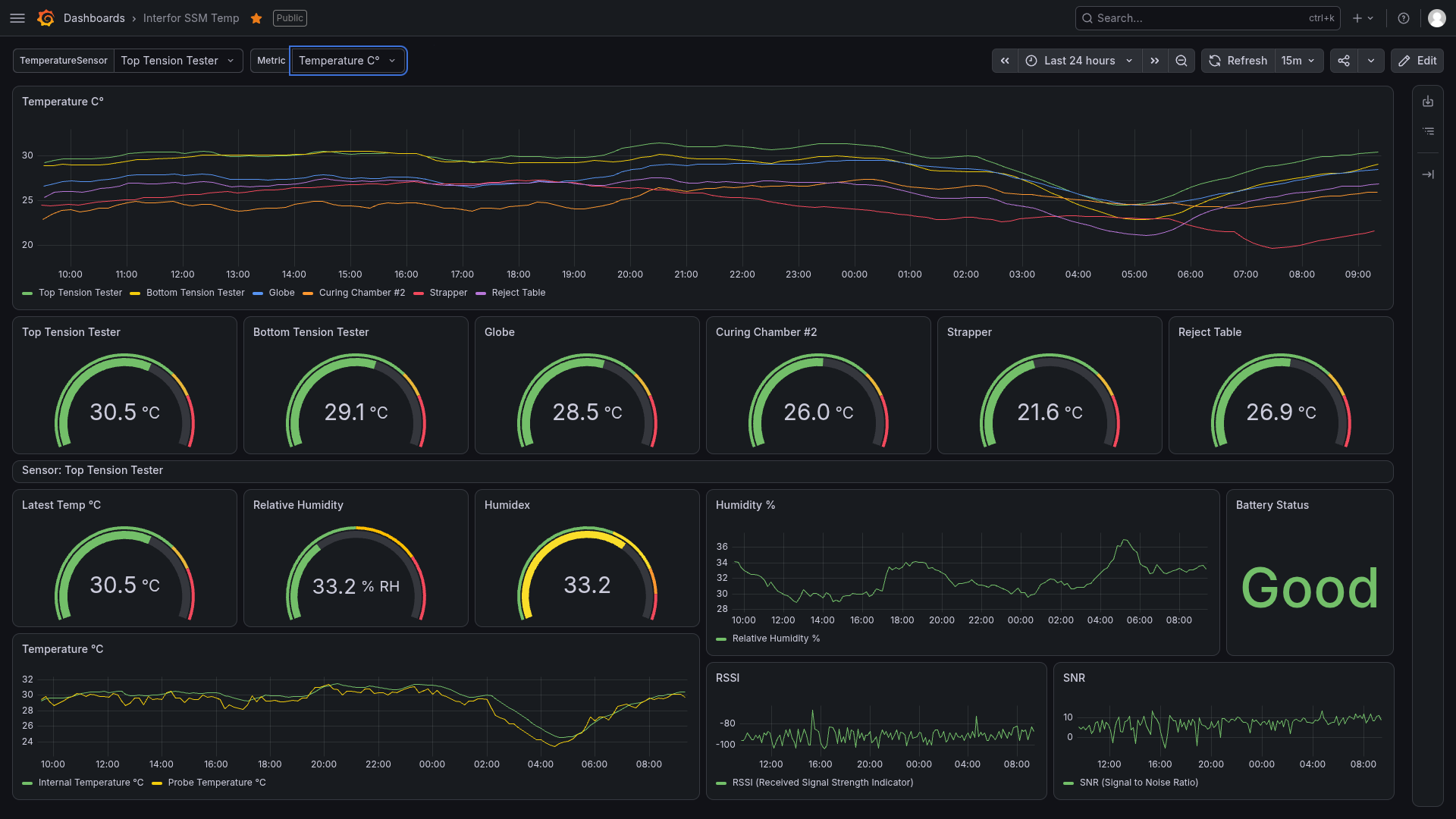
The dashboard enables easy access to consistent and accurate data by displaying the current values and trends. This improves on our previous approach of occasional manual measurements. Long-term trends can help us understand the conditions inside the mill throughout the entire year. The information contained in the dashboard helps the Interfor Team to make informed decisions related to worker comfort, heat stress awareness, and operational planning.
Here you can see an example of the dashboard page. At the very top, the active sensor, variable, and time range can be selected. The top graph shows a trend of the selected variable for all sensors, which can be changed to show temperature, humidity, or the calculated humidex. Below is a row of gauges showing the most recent temperature value of each sensor. The section underneath that contains all the graphs and gauges for all variables of the currently selected sensor.
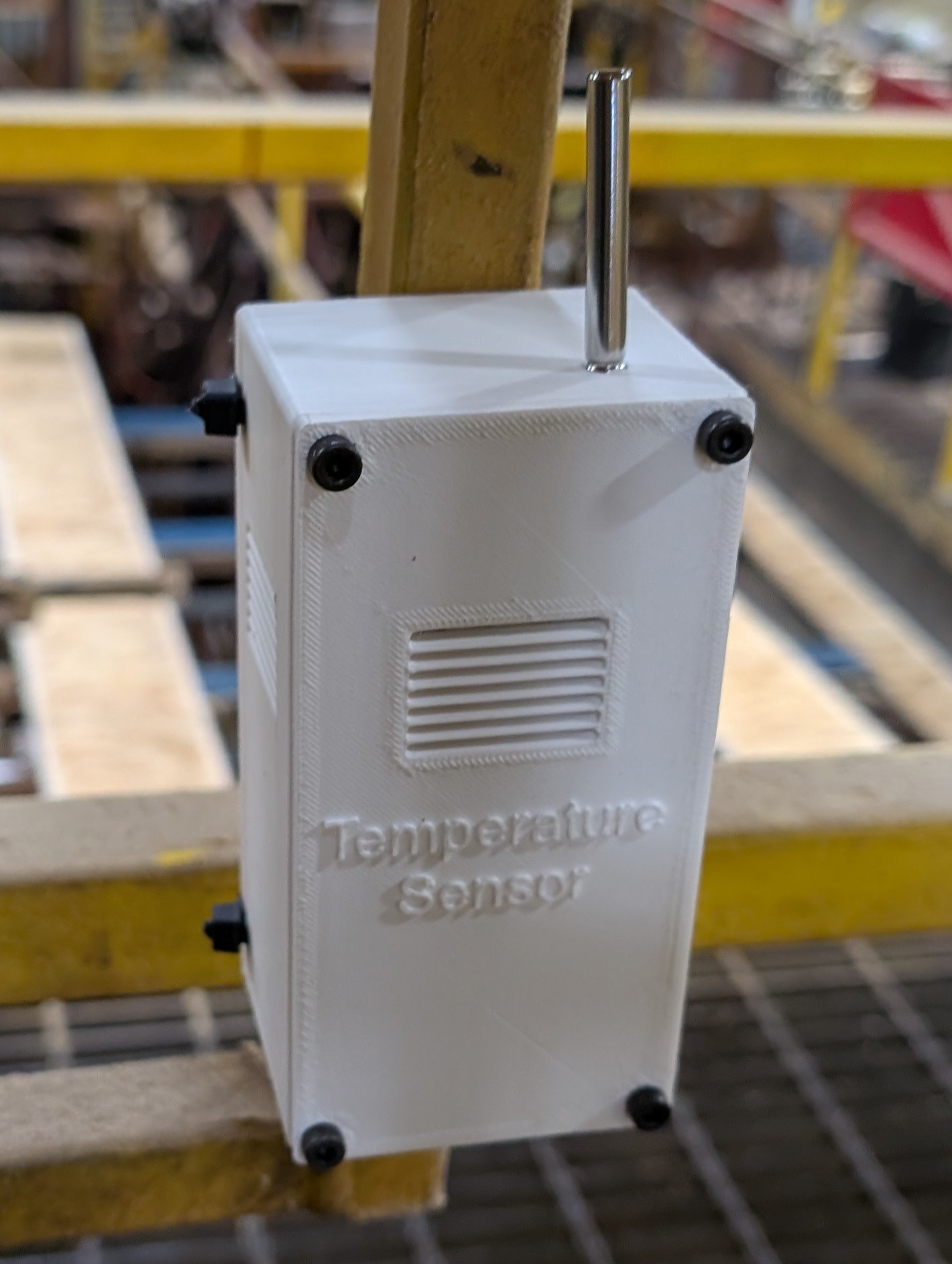
For the project, we installed six sensors in key operational areas throughout the mill. These areas include the Globe I-joist assembly machine, curing chamber #2, bundle strapper, reject table, and both the top and bottom tension testers. These locations provided an opportunity to collect data from diverse areas of the mill at different elevations within the facility. I also designed and 3D-printed cases for the sensors to protect them from wood dust, accidental impacts, and unintentional contact that could affect their performance. Additional sensors can be easily added to our system in the future to provide broader coverage or open new variables to be monitored.
While the technology behind the project is an important component, the focus of the project was always on supporting the employees and their safety in the workplace. Having a better understanding of the current conditions and trends is only valuable with the implementation of proactive measures to protect the safety and comfort of our employees. Effective heat stress management relies on practical workplace controls and employee awareness. At the facility, employees are aware of the signs and symptoms of heat stress within themselves and their coworkers.
However, preventing heat stress before it develops is the best approach. We do this through common preventative measures, including increased fluid consumption, providing electrolyte replacement drinks and freeze pops, using fans and portable cooling units to improve comfort, scheduling longer or more frequent breaks during periods of elevated heat, and encouraging employees to monitor for signs of heat-related illness. In extreme cases, we have even stopped production through demand response shutdowns to help cool off workers and reduce the ambient air temperature within the mill. These actions align with Interfor's commitment to maintaining a safe and healthy workplace.
One of the most rewarding aspects of this project was seeing how data and technology can be applied to a real workplace challenge. Modern forestry products increasingly rely on innovation, not only to improve production processes but also to enhance employee safety and well-being. By combining environmental monitoring with established heat stress prevention practices, facilities can make more informed decisions and take proactive steps to protect workers.